Major Indices
| Index | Performance |
|---|---|
| S&P 500 | -2.93% |
| DOW Jones | -6.67% |
| NASDAQ | -3.3% |
| FTSE 100 | -0.36% |
| DAX | -2.12% |
| Nikkei 225 | -3.37% |
| Shangai Composite | +0.47% |
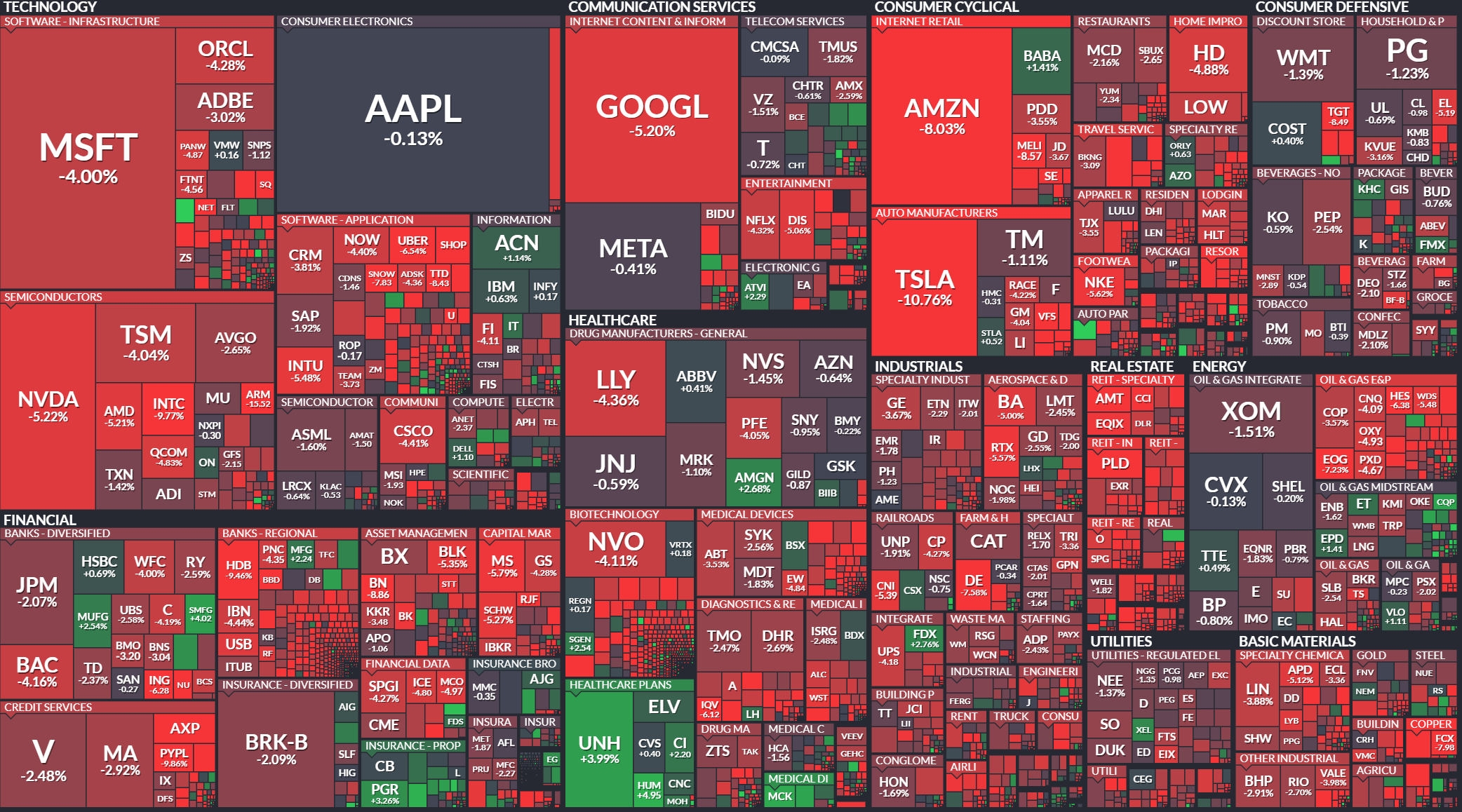
World Sector Performance
UK CPI falls short of Projections
YoY CPI came in at +6.7% vs 7.1% expected. Core CPI was also 6.2% which is a significant drop from the 6.9% seen in July. This increased the likelihood of a pause in interest rate hikes on Thursday, as the monetary tightening appears to be slowing down the economic growth.

Bank of England Pauses Rate Hikes
After 14 consecutive rate hikes, the BoE finally paused rate hikes, following on the positive inflation data on Wednesday. It was a 5-4 split vote in favour of the pause, with the governer Andrew Bailey casting the decisive vote. This news extended the recent decline of the British Pound. Borrowing costs are expected to remain high whilst inflation drops but for how much longer? The markets predict rates will stay high until late 2024. BoE officials did not want to give guidance on their next moves, but stressed that in the coming months it would be only either pauses or hikes. Goldman Sachs recently lowered their forecasted terminal rate by 25bps to 5.5%.
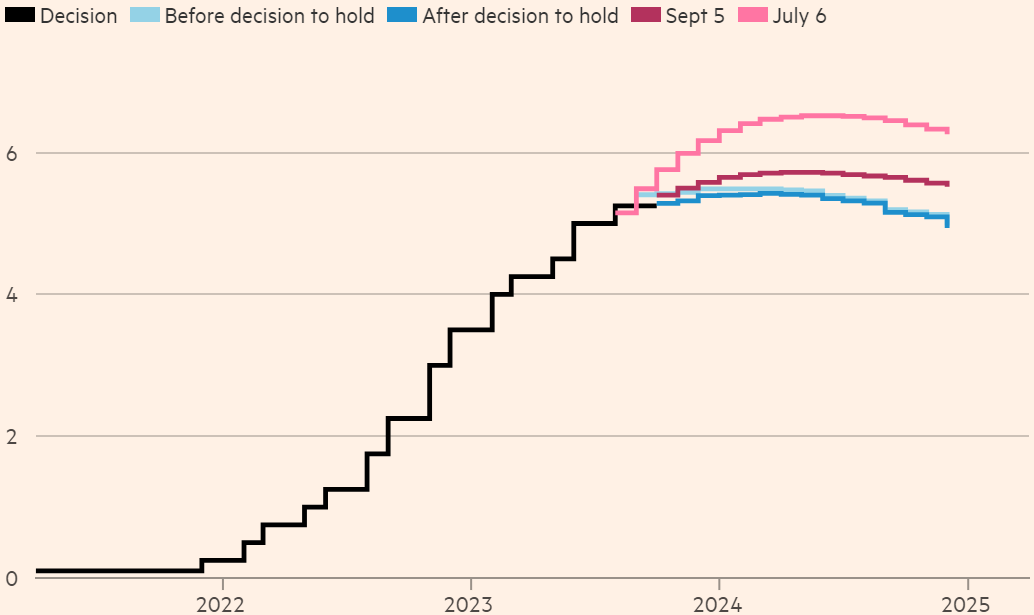
How BoE Projections have changed (Financial Times)
FED Rates Remain on Pause
As expected, the FED left rates unchanged on Wednesday, but the most exciting thing was the quarterly release of economic projections which emphasised the hawkish stance of the FED members. The DOT plot below shows where each FOMC member thinks interest rates will be in the future, with each dot representing a members view. This is more hawkish than the June dot plot, which can be seen below September's. Equities reacted very badly, with the S&P 500 index falling almost 3% this week, whilst the DXY continued to surge, and government bond yields rose.
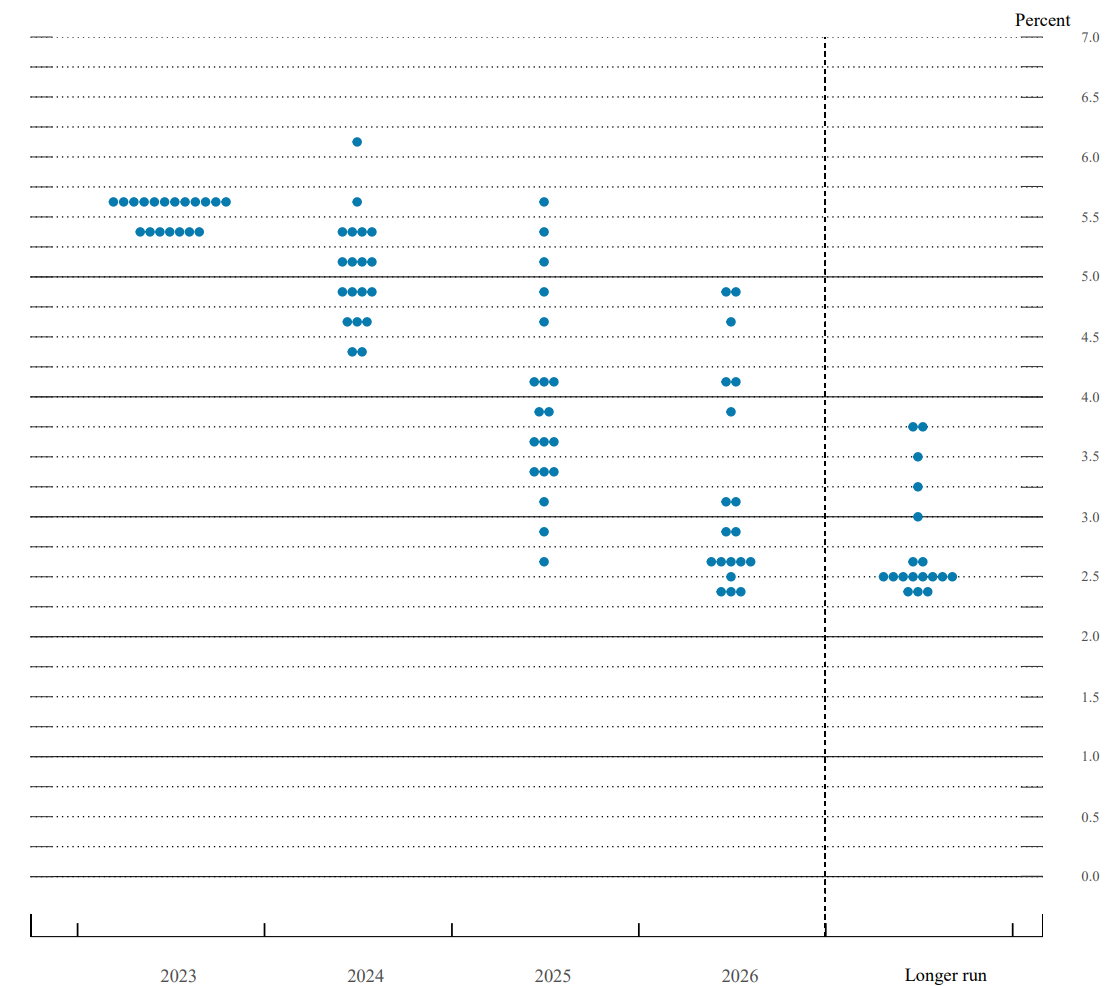
FED Dot Plot September 2023
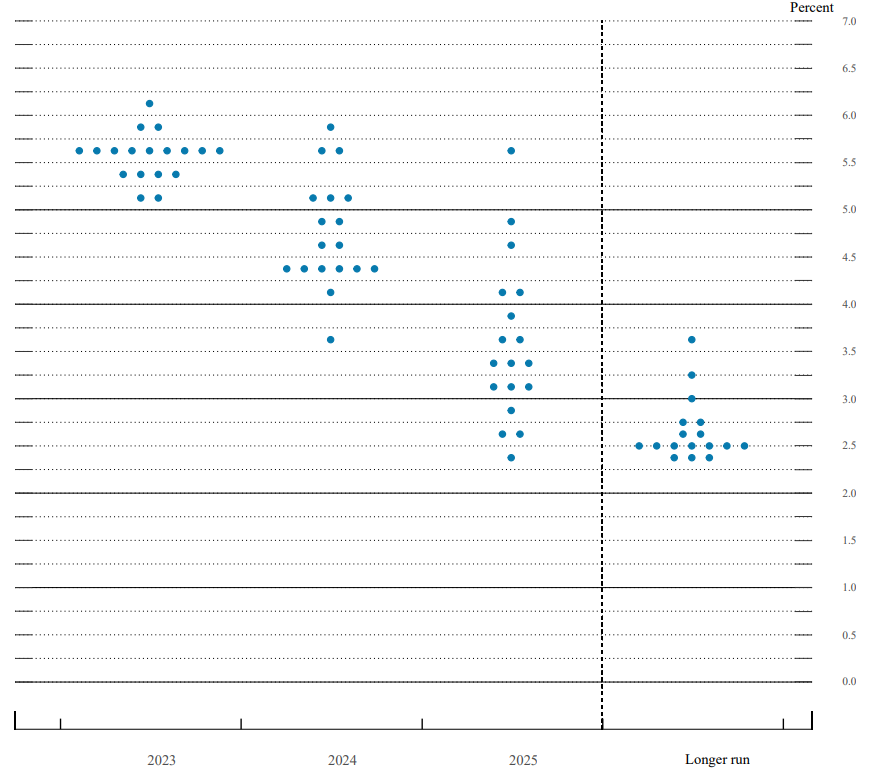
FED Dot Plot June 2023
Bank of Japan
Core CPI hit 3.1% in August YoY, slightly higher than expected. Inflation has remained above the 2% target for 17 straight months. The BoJ continue their ultra-loose monetary policy with short term interest rates at -0.1%, and have capped the 10-year government bond yield around zero. They first introduced negative interest rates in 2016 to fight chronic deflation. The central bank has decided to intervene only when the 10-year JGB yield moves past 1.0%. The Japanese Yen sunk against the USD upon this news, having now weakened over 11% this year.
Other Headlines
- Microsofts acquisition of Blizzard moves forward after approval from the UK's competition regulator
- UK economic activity has fallen at the fastes pace since Jan 2021
- Goldman Sachs forecasts oil to hit $100 a barrel
Coming Up Next Week...
- Wednesday: US Durable Goods Orders MoM
- Thursday: US GDP Growth Rate QoQ
- Friday: EU Inflation Rate YoY
US Core PCE Price Index, Personal Income and Personal Spending MoM - Saturday: China Manufacturing Purchasing Managers' Index