You can read the full dissertation Here.
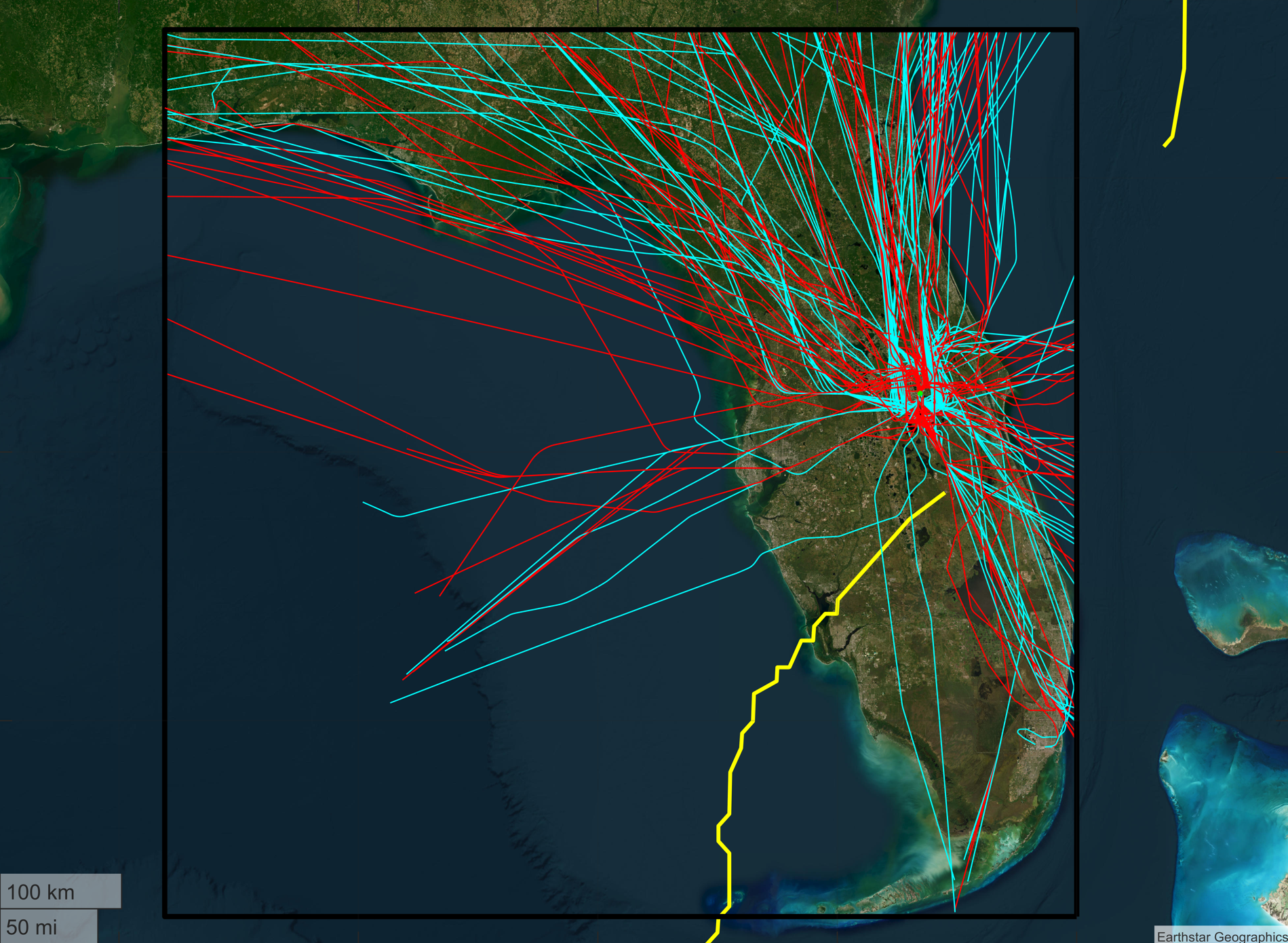
Hurricanes continue to cause large disruptions to the global transportation network, whilst climate change is an attributed factor to the increasing frequency and magnitude of tropical storms. This poses an increasingly significant threat to aviation; which can be investigated with the use of air traffic data (ADS-B). This study aimed to investigate the quantification of aircraft trajectory disruptions during hurricane conditions via the calculation of aircraft heading changes. This was in light of unpredictable and dangerous weather causing disruptions to flight paths. A case study of Florida airspace during the 2022 Hurricane Ian observed a 103% increase in the variability of aircraft routes flown as characterised by heading changes per 100 km of flight. Conversely, a comparative case study of Hurricane Idalia observed a 30% decrease in variability. No correlation was observed between aircraft heading changes and proximity to the storm eye. Further studies with additional data resources are needed to establish a better understanding of hurricane-impacted airspace.
This study extracted over 1.1 million rows of flight data using SQL. Excel and MATLAB were used for cleaning and post processing.
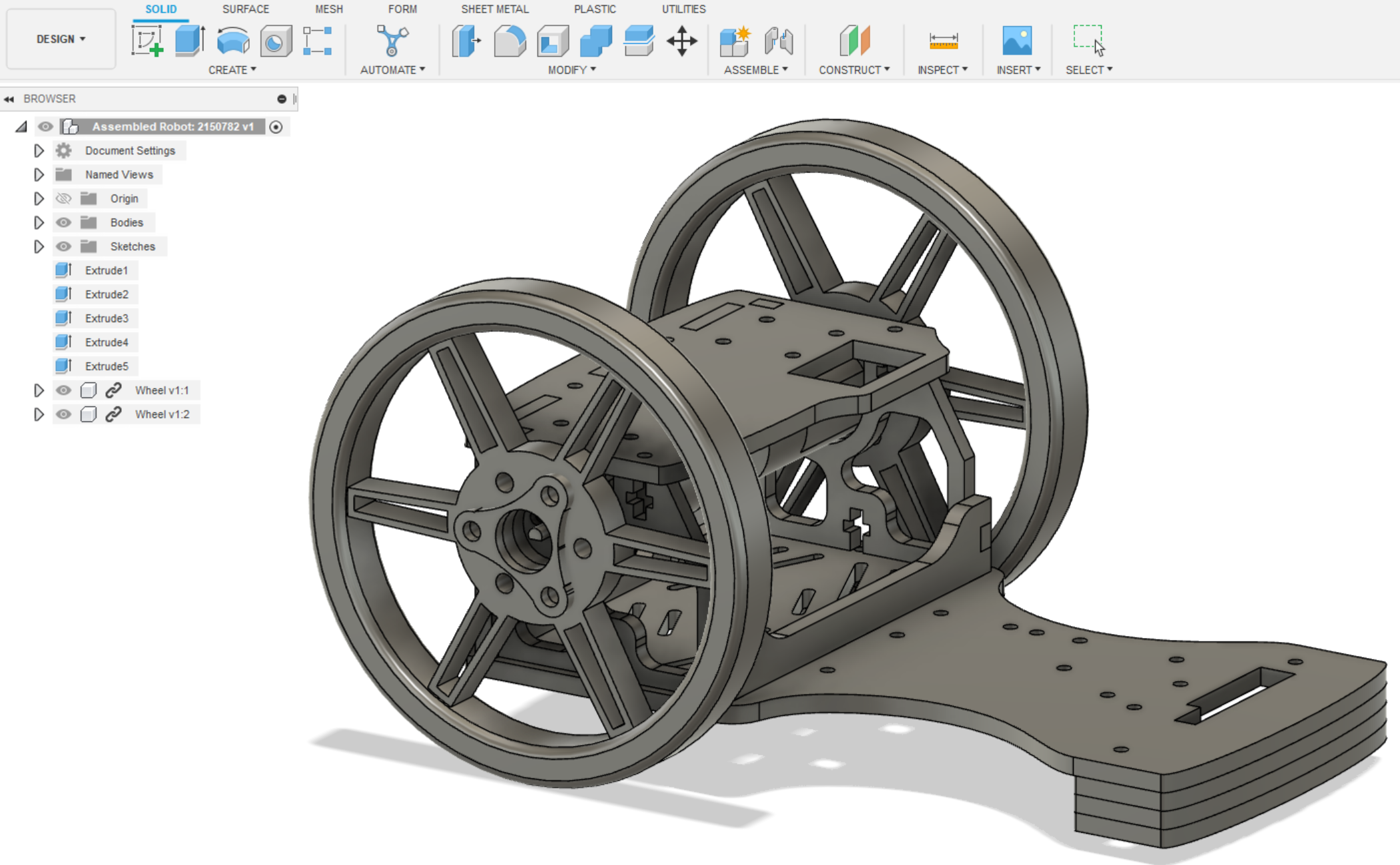
Used CAD software (Fusion 360) to design and assemble a 'line following robot' given a range of specifications, requirements, and 2D drawings to comply with.
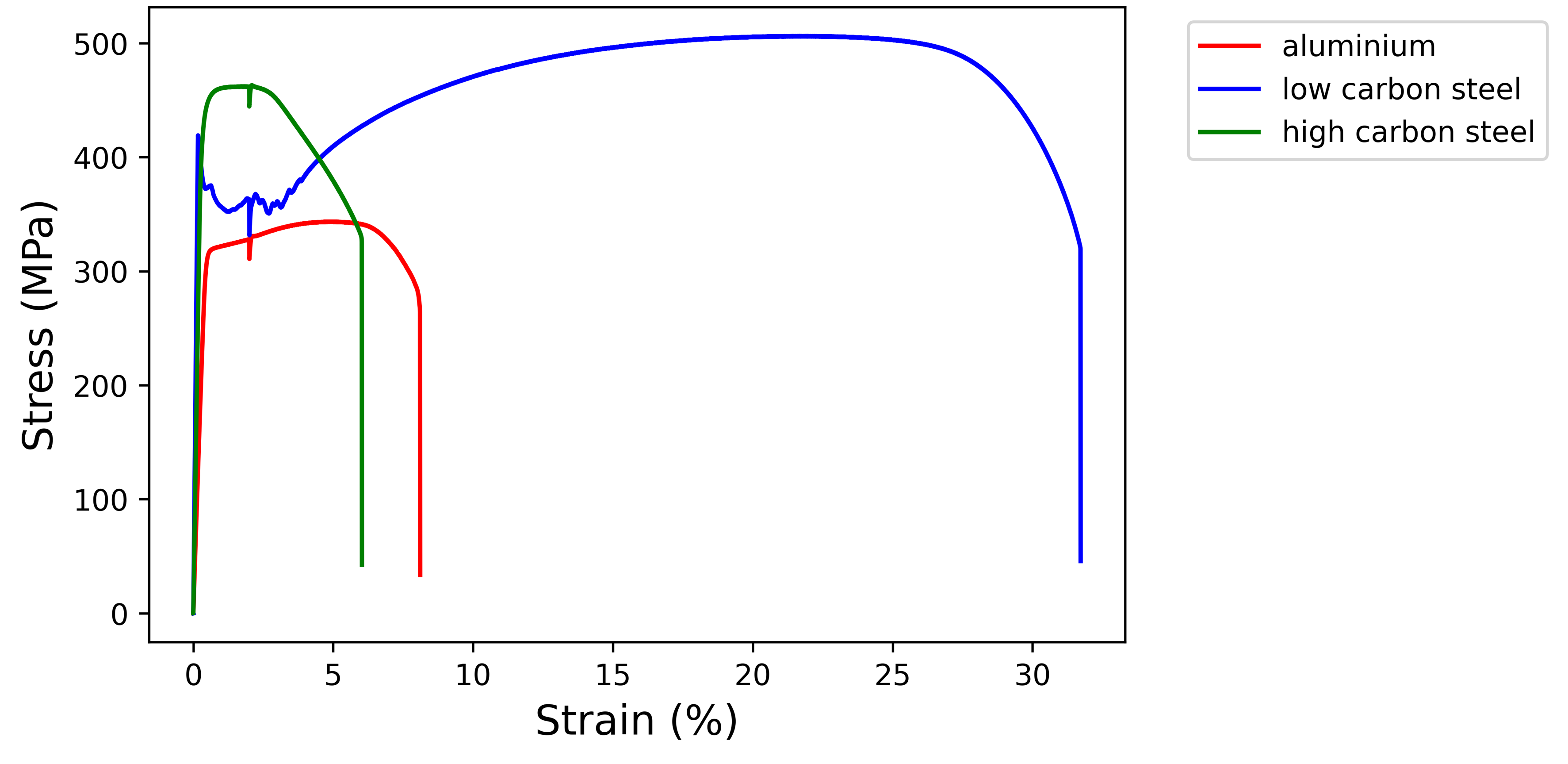
Used Python to analyse data in a csv file of the behaviour of different metal alloy specimens as they underwent a torsion test, tensile test and charpy impact test. Their performance and determined parameters were used to determine the most appropriate material and diameter for a rod and pin used in an aircafts control surface actuator mechanism, demanding the ability to withstand fatigue from variable loads and temperatures throughout their lifetime by retaining their strength, function and shape.
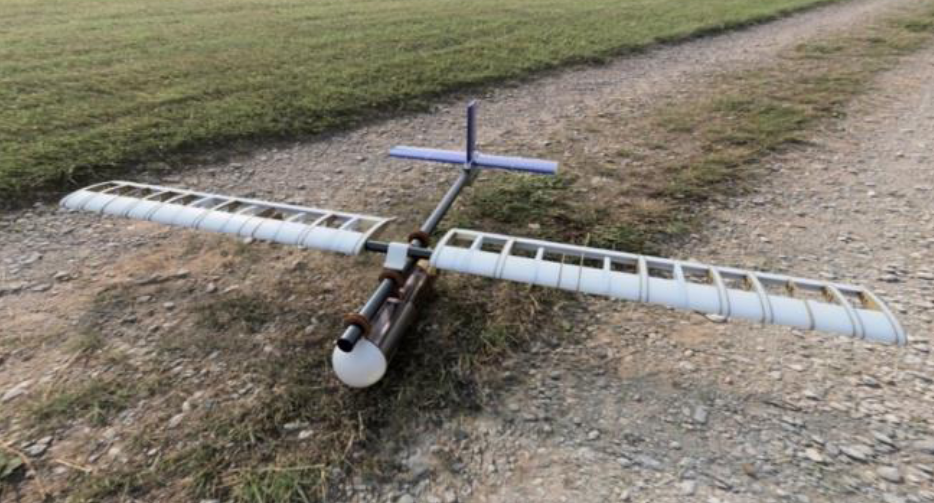
Worked in a team of 100 students to design and manufacture a UAV, with the aim of shortening the minimum take-off distance and ensuring the aircrfat could withstand loads of up to 6g. Took responsibility for the tailplane elevator mechanism, which used a PID closed-loop control system (made with Arduino) to produce the desired pitch rate, determined from the calculated relationship between servo motor deflection angle and elevator deflection.
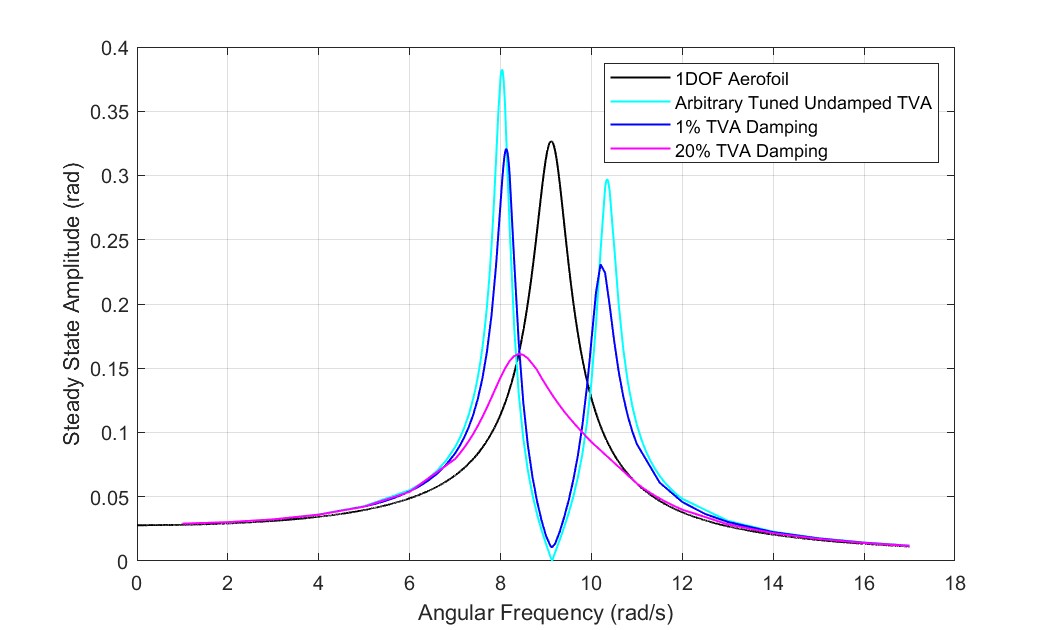
Analysed the response of a single degree of freedom aerofoil, using a MATLAB simulation. Constucting the systems equation of motion and gathering data from the simulation with varied inputs allowed the amplitude-frequency characteristics to be determined. Introducing a secondary degree of freedom in the form of a tuned vibration absorber generated a region of anti-resonance at the desired operating frequency.
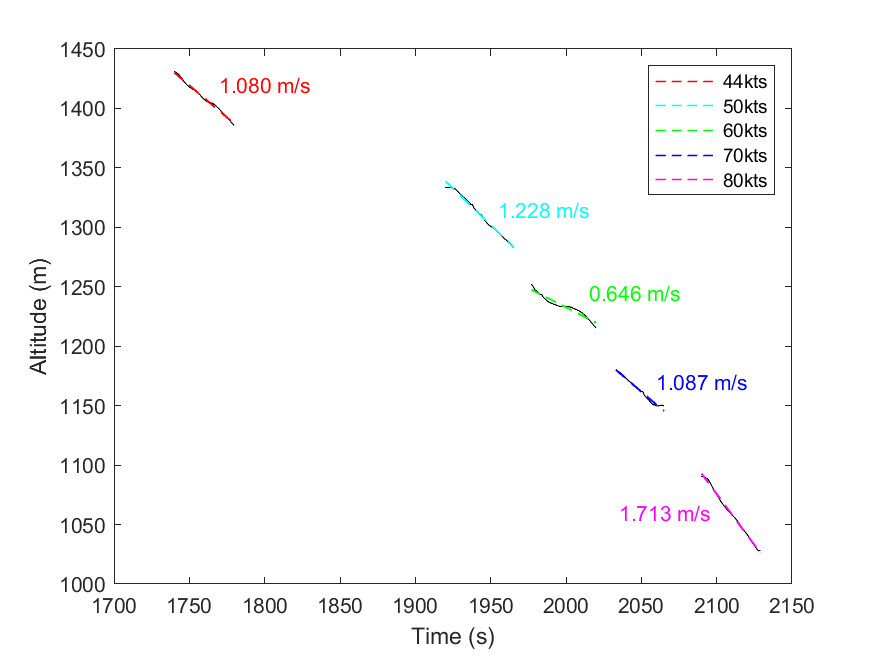
Analysed real flight data gathered from the University of Bristol Glider, assessing its dynamic performance in trimmed condition when subject to a sudden control stick input. Constructing the linearised equations of motion allowed the eigenvalues and eigenvectors to be determined, giving an insight into the handling qualities of the aircraft.